
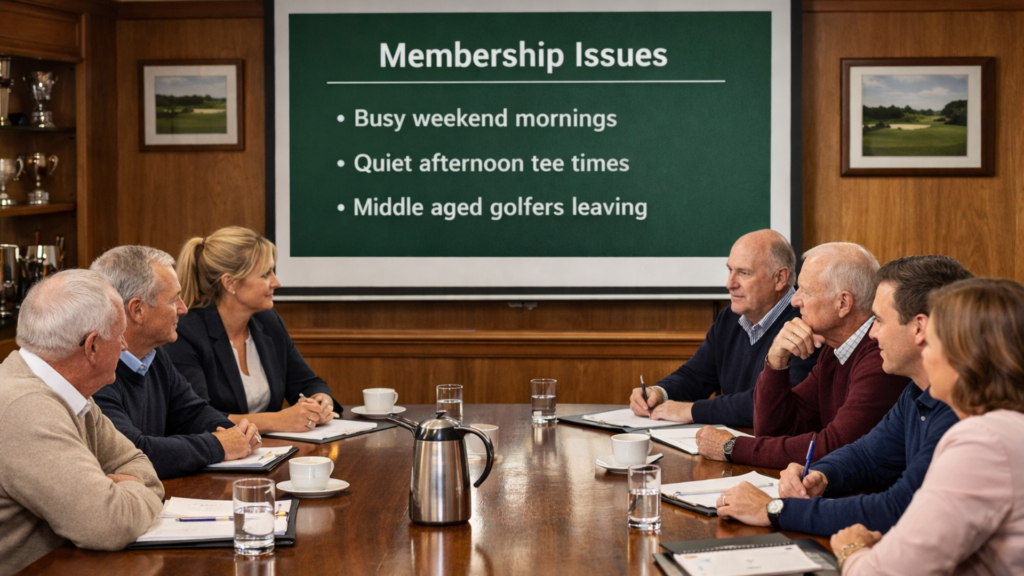
For many golf clubs, flexible membership still carries a certain stigma. It is often seen as a discount product, a compromise option, or even a threat to traditional membership categories. That perception is understandable, especially for clubs that have spent years building a model around full membership as the core offer.
But in today’s market, that view can lead to missed opportunities.
The reality is that flexible membership is not about devaluing golf. When designed properly, it can be a smart commercial category that helps clubs attract more golfers, generate incremental revenue and create a stronger pathway into longer-term club engagement.
Flexible membership is best understood as the middle ground between green fee golf and full membership.
It gives golfers a stronger connection to a club than casual pay-and-play, but without asking them to commit to the cost or usage expectations of a traditional seven-day membership. For many golfers, that makes perfect sense. Not everyone can justify full membership because of work, family, finances or simply the way they play.
What flexible membership is not, however, is a cheap version of membership.
It should not be treated as a race to the bottom on price, nor should it be used to fill spare capacity without a clear strategy behind it. When clubs position it purely as “budget golf”, they instantly weaken its value and attract the wrong expectations from the market.
A strong flexible membership product is not about discounting. It is about giving the right type of golfer the right type of access.
One of the biggest reasons flexible membership is misunderstood is because it is often judged through the lens of traditional membership.
Club managers and owners naturally ask questions such as: Will this cannibalise full membership? Will existing members downgrade? Will we end up giving away too much golf?
These are valid concerns. The problem is that when clubs stop there, they often dismiss flexible membership before properly understanding how it should work.
That can lead to poor commercial decisions. Some clubs avoid the category altogether and lose golfers who are not ready for full membership but want more than occasional green fee golf. Others launch a flexible product without enough structure, making it too loose, too cheap or too unclear.
In both cases, revenue is left on the table.
The real issue is not flexible membership itself. It is poor product design, weak positioning and a lack of strategic thinking around where it fits in the wider membership model.
The golf market has changed. Clubs are no longer only dealing with two types of golfers: full members and visitors.
There is now a large audience of golfers who want to belong somewhere, play regularly and feel part of a club, but who cannot always justify the traditional model. They may be younger professionals, parents with limited time, lapsed members returning to the game or golfers balancing membership with other commitments.
This is where flexible membership becomes valuable.
It bridges the gap between green fee play and full membership. It gives clubs a way to convert repeat visitors into something more valuable, while also creating an entry point for golfers who may one day progress into a traditional category.
Seen in that light, flexible membership is not a threat to full membership. It is part of the pathway towards it.
The clubs getting the most from flexible membership are not treating it as an afterthought.
They are designing it carefully. They are clear on who it is for. They are using it to monetise the right demand, protect peak times and create a more rounded membership offering. Most importantly, they see it as a strategic category within their overall commercial model.
That shift in mindset matters.
Because when flexible membership is viewed as a side offering, it is usually marketed poorly, explained badly and measured in the wrong way. When it is viewed strategically, it becomes a tool for growth.
For golf clubs looking to increase membership numbers, appeal to a wider audience and create more membership revenue, flexible membership deserves to be understood properly.
Not as a discount product. Not as a compromise. But as a modern membership category that reflects how many golfers now want to play.
When clubs misunderstand flexible membership, the impact is rarely just theoretical.
In practice, it can lead to poorly designed membership categories, missed revenue opportunities and unnecessary pressure on traditional products. Some clubs avoid flexible membership altogether and lose golfers who are not ready for full membership but want more commitment than casual green fee play. Others launch a model that is too loose, too cheap or too unclear, which can create confusion internally and weaken commercial performance.
The result is often the same: demand exists, but the club is not structured to convert it properly.
That means quieter tee times remain underused, potential members stay as occasional visitors, and the club misses the chance to build a stronger pathway between casual play and long-term membership.
We use cookies to improve your experience. You can accept or reject non-essential cookies.