
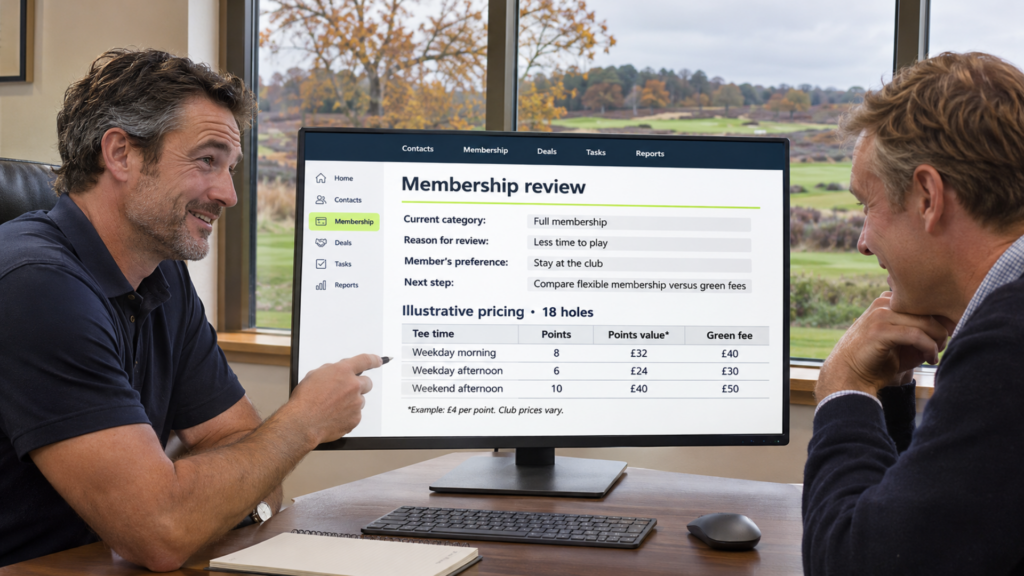
“I still enjoy being a member. I just don’t play enough anymore.”
For a golf club manager, that should start a conversation. If the only options are renewing full membership or leaving, the club could lose someone who still wants to belong.
As clubs across the UK and Ireland prepare for 2027, now is a useful time to review the alternatives. Shorter winter days limit playing opportunities, but a seasonal reduction in golf is different from a lasting change in someone’s circumstances.
The question is straightforward: could another membership category suit this golfer while still making commercial sense for the club?
Before suggesting alternatives to full golf membership, establish what has changed.
“I’m not getting value” could mean fewer opportunities to play, difficulty booking suitable times, financial pressure or disappointment with the club experience. Each needs a different response.
Ask how often the member expects to play, which days suit them and whether the change is temporary. Compare their answers with their playing history, including the summer. A quiet November alone tells you little about next year’s needs.
Our guide to understanding why members resign explains how to capture those differences. PlayMoreGolf
If booking difficulties or poor service are driving the decision, address those problems directly. Moving someone into a cheaper category will not resolve them.
Clubs do not need every possible category. They need a manageable range with a clear purpose.
| Membership option | When it may be suitable | What to check |
|---|---|---|
| Five-day | A golfer can play regularly during the week but no longer needs weekends. | Their available days match the category’s actual access. |
| Intermediate | A golfer qualifies for an existing age-based category. | Eligibility and the future move into the next age band are clear. |
| Flexible | A golfer expects to play occasionally and wants to remain a playing member. | Points costs, available times and likely annual spend suit their needs. |
| Country | Someone has moved away but returns occasionally. | They meet the club’s residency or distance criteria and playing limits. |
| Social | Someone wants to remain involved in club life without regular golf. | Clubhouse benefits and any separate playing arrangements are understood. |
| Temporary arrangement | A defined period away from golf makes annual playing membership unsuitable. | Duration, fees, rights and the return process are agreed. |
These are options to assess against your own rules, capacity and finances.
A five-day category will not help someone who can only play on Sundays. Flexible membership will not suit a member whose main priority is a competition they could no longer be eligible to enter.
An alternative category should offer a different level of access or benefits at a different price.
Full membership must retain a clear advantage for golfers who play regularly and value the club’s fullest playing rights. Depending on your structure, that could include booking priority, wider access, competition eligibility and better value at higher playing frequency.
Before approving a category, compare the total annual cost and benefits for an occasional golfer, a regular weekday golfer and a frequent weekend player.
If someone can substantially reduce their subscription while keeping almost everything they use, review the structure.
Our article on protecting full membership explores this balance further.
Be specific about permitted playing times, booking windows, competition entry, additional charges and any limits on rounds.
Protect the access full members pay for, particularly where weekend demand is already strong. Check winter capacity separately: fewer daylight hours can concentrate demand into a smaller number of tee times.
Restrictions also need to leave the alternative category usable. There is little retention value in offering membership that excludes every time the golfer can realistically play.
Confirm the agreed rights in writing before the member changes category.
The answer should be consistent whether a member speaks to the office, professional shop or general manager.
Create a one-page comparison covering eligibility, fees, playing access, booking priority, competition rights and category-change rules. Name the person who can approve exceptions.
A simple conversation might begin:
“What has changed, and what golf would you realistically like to play next year? We can then check whether another category would suit you.”
Explain the relevant options, including what the member would give up. Record their decision and agree a review date where appropriate.
Record the original category, new category, reason, move date and annual revenue retained after relevant deductions. Keep later upgrades, further moves and resignations linked to the same member.
A member retained in a lower category is still a member, but the reduction in income belongs in the budget. Our guide to measuring membership retention explains that distinction.
Monitor potential cannibalisation too: are golfers who would otherwise renew full membership moving down while maintaining similar playing patterns?
That is a warning to investigate, rather than proof on its own. Record whether the member had actually intended to leave; do not count every category change as a prevented resignation.
The R&A’s participation research published in June 2026 highlights the importance of shorter and alternative formats in a world where golfers face competing demands on their time. That wider trend makes understanding individual playing needs worthwhile; it does not establish which category your club needs.
Start with your resignation reasons, member conversations and available capacity.
Where those reveal occasional golfers leaving because full membership no longer fits, flexible membership may be an appropriate response. Elsewhere, the answer could be five-day membership, a temporary arrangement or improvements to the existing member experience.
If your club is losing golfers who still want to play occasionally, speak to PlayMoreGolf about whether a carefully structured flexible category could help.
We use cookies to improve your experience. You can accept or reject non-essential cookies.