
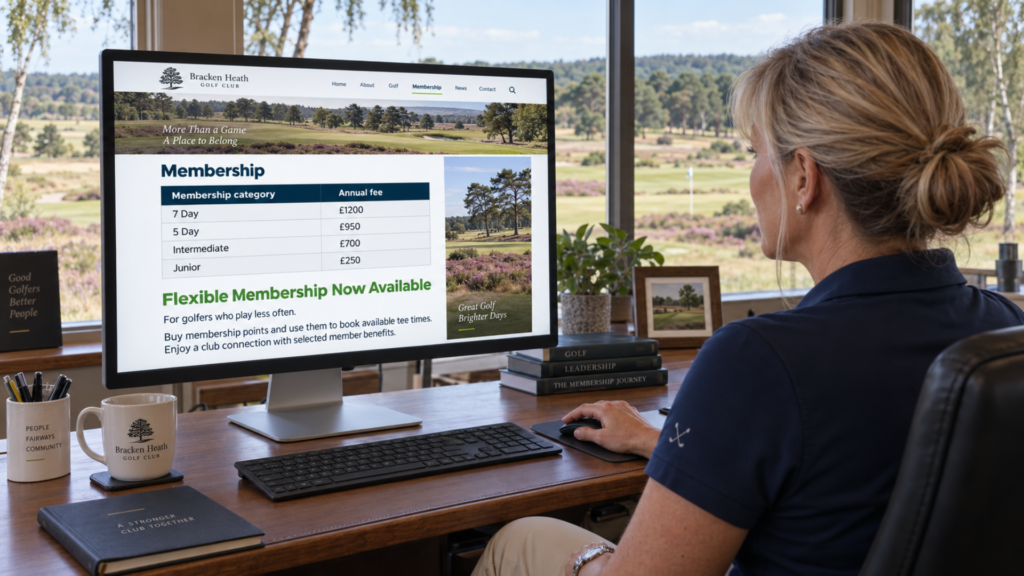
The committee has approved the category. The points matrix is agreed. Flexible membership is now on the club website.
That is an important start, but the results depend on what happens next.
As clubs review this summer and prepare for 2027, it is worth looking at what happened after golfers showed an interest. Were enquiries followed up? Did prospects understand the offer? Was joining straightforward?
A well-structured flexible golf membership can still underperform when the work around it is overlooked.
Agreeing the right price and access rules gives the category a sound basis. The next job is getting it in front of suitable golfers.
A launch announcement provides an initial push. Clubs also need a regular marketing plan, combining relevant website content, paid social or search campaigns and email communication with appropriate audiences.
This summer’s repeat local visitors and previous membership enquiries are useful starting points, where marketing permissions allow. Explain who the category suits and make it easy to ask a question. Review messages as daylight and playing opportunities change.
Set a practical service target: acknowledge an online enquiry immediately, then aim for a personal response within one working hour where possible, and on the same working day. For enquiries arriving after hours, follow up the next working morning.
An automated acknowledgement confirms receipt. A useful personal reply answers the golfer’s question and offers a clear next step.
Assign responsibility and arrange cover for days off. During a busy summer week, enquiries can otherwise sit between the office and professional shop, with each assuming the other has replied.
Someone enquiring may understand an annual subscription or a visitor green fee but be unfamiliar with buying and using points.
Ask when and how often they expect to play. Then use the club’s actual points matrix to show what those rounds would require. Explain booking windows, access restrictions, included benefits and top-up or renewal arrangements.
Keep the distinction from full membership clear. If their preferred playing times do not suit the category, say so. A clear explanation helps golfers make a decision and prevents misunderstandings after joining.
A customer relationship management system, or CRM, should show where each enquiry came from, who is responsible, what has been discussed and when the next contact is due.
Use clear stages such as new enquiry, contacted, considering membership, joined and closed. Every open enquiry needs a next action.
Build a structured sales journey around the golfer’s questions. For example, send the relevant points information after the first conversation, then check back on an agreed date. Update automated messages when someone replies, joins or asks for contact to stop.
Payment processing, confirmation and account setup all need to work reliably. Test the joining process on a phone, including what happens if a payment fails.
New members should receive clear instructions on booking, using points and contacting support. A welcome from the club helps them feel part of it from the outset.
Support continues with booking queries, points top-ups, account issues and renewals. Check whether new joiners have made their first booking, and offer help if they have struggled to get started.
Review campaign spending, enquiries, response times, conversion to membership and revenue received. Include acquisition and servicing costs when assessing the category’s contribution.
Check outstanding enquiries weekly and review overall performance monthly. Member activity and renewal rates add a longer-term view.
If enquiries are arriving but few golfers join, investigate follow-up and the explanation of the offer before increasing advertising spend. If prospects consistently want unavailable tee times, revisit the audience and campaign message. Comparing this summer’s campaigns can help identify which changes to test next.
Someone must prepare campaigns, answer questions, maintain records, resolve payment issues and review results. Those responsibilities continue after launch.
Give each task an owner, allocate time and agree who provides cover. The office and professional team also need enough training to explain the category consistently.
When reviewing the cost of running flexible membership internally, include staff time alongside advertising, software and transaction fees. A category that depends on work being fitted around everything else is difficult to manage consistently.
PlayMoreGolf’s full-service partnership brings together ongoing marketing and lead generation, CRM tracking and automated enquiry follow-up. Payment processing, member onboarding, customer support, dedicated club support and reporting help clubs manage the category beyond the initial launch. Explore PlayMoreGolf’s services.
The club still has an essential role in agreeing suitable access, keeping its team informed and welcoming members on site. Clear responsibilities make that partnership work.
As you review this summer’s results, look at the support behind the category as well as the proposition itself. Consistent attention to enquiries and member experience gives a sound membership offer a better chance of delivering the revenue you planned for.
Speak to PlayMoreGolf about supporting your flexible membership category.
We use cookies to improve your experience. You can accept or reject non-essential cookies.